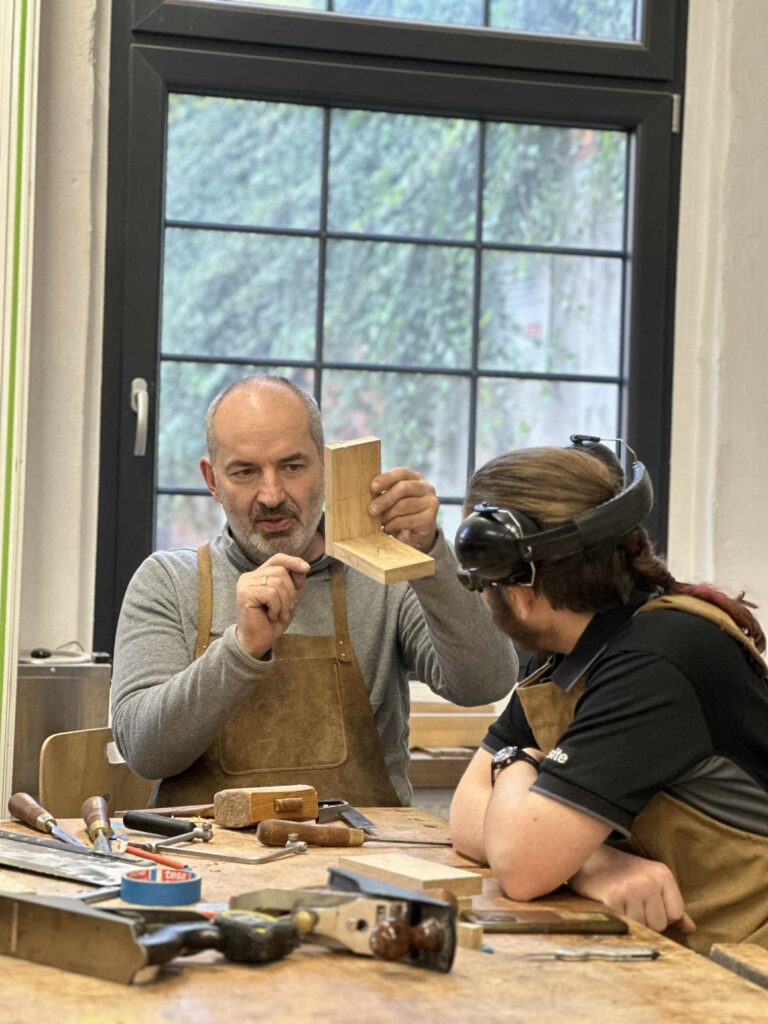
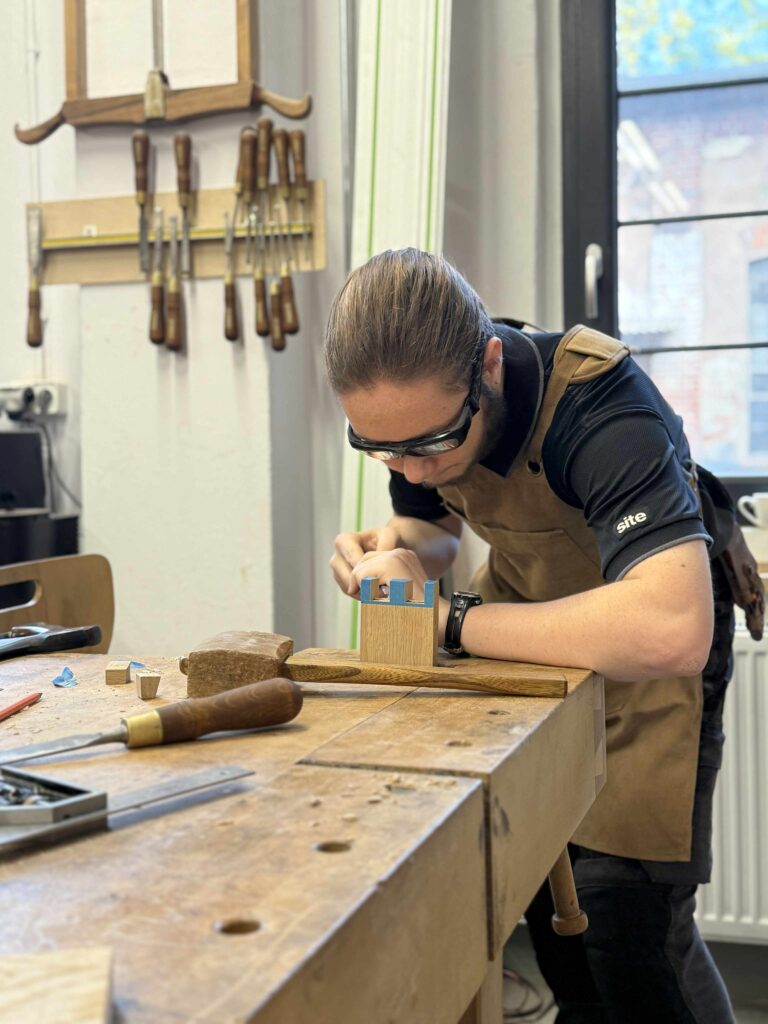
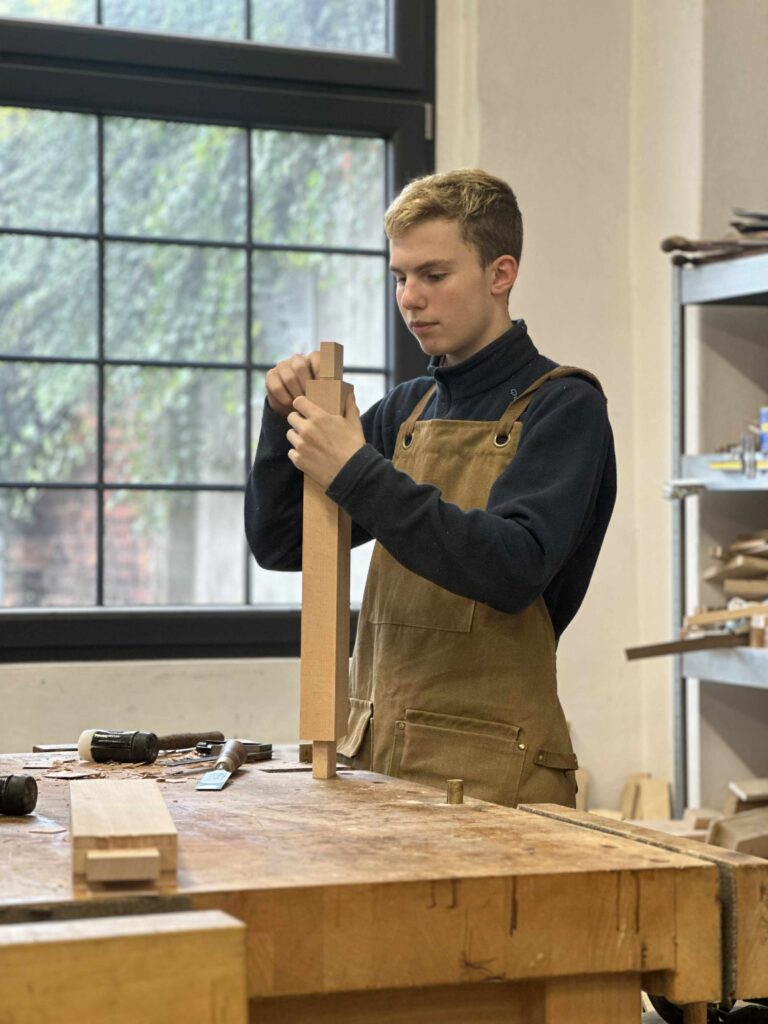
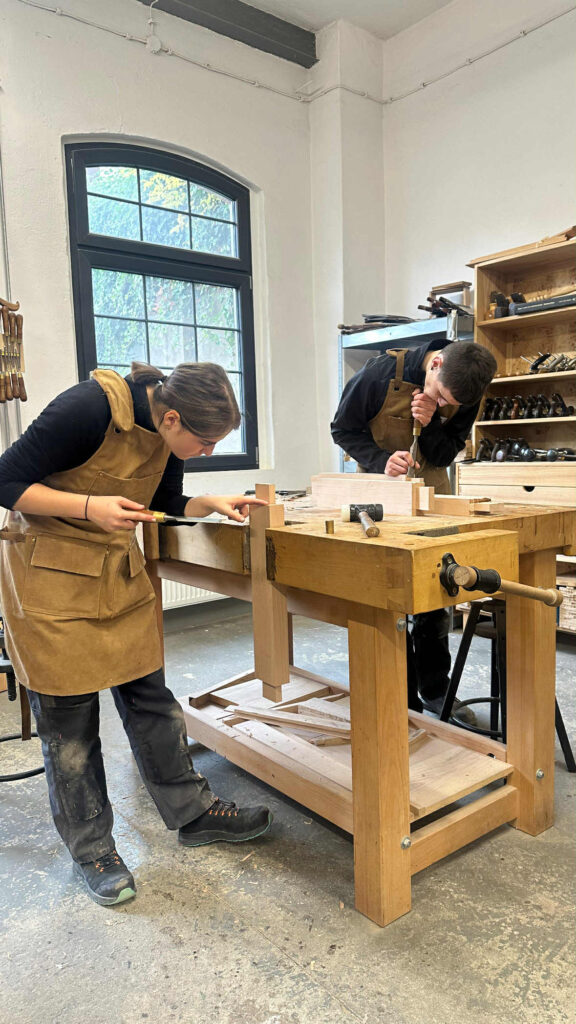
At Bensari Workshop in Wrocław, we had the pleasure of hosting apprentices from Les Compagnons du Devoir – a French craft organization with medieval roots.
As part of the Erasmus+ program, these young woodworkers took part in an intensive training focused on traditional woodworking techniques, learning hand planing, layout and marking, and classic joinery such as mortise and tenon joints and dovetail joints.
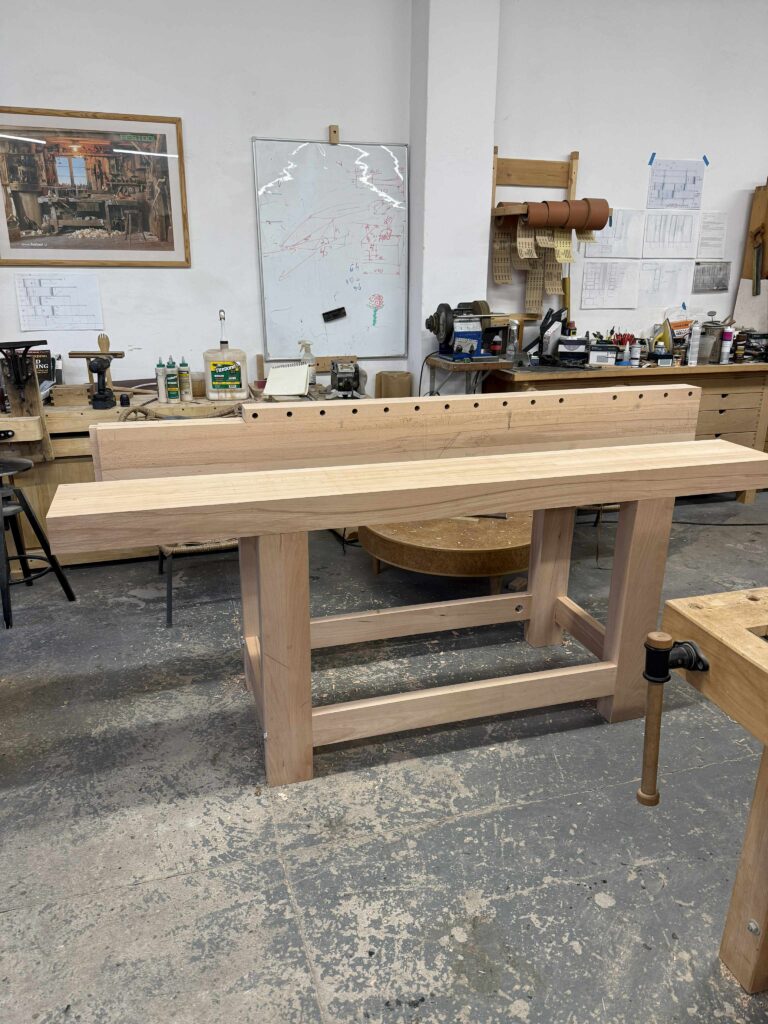
The highlight of their stay was the construction of three Roubo-style workbenches made from steamed beech, built according to Benchcrafted plans.
On Thursday, October 30, the apprentices concluded their time in my workshop and returned to France.
The past weeks in Wrocław were filled with learning, focus, and genuine woodworking practice.
Each day, they trained with hand tools, practiced layout and marking, and perfected traditional joinery – mortise and tenon and dovetail joints. As part of their practical training, they built three Roubo workbenches – demanding yet deeply rewarding constructions that became the culmination of their stay.
Building the Roubo Workbenches
The apprentices built three split-top Roubo benches from steamed beech, using Benchcrafted hardware and plans. We used one cubic meter of beech for the project, and the entire process offered a complete craft experience – from selecting boards at the lumber yard, through milling, gluing, and planing, to cutting traditional joints and assembling the finished structure.
The design, inspired by André-Jacob Roubo’s 18th-century work, combines simplicity, mass, and perfect ergonomics. It remains one of the most respected workbench designs ever created, ideally suited for hand-tool woodworking.
For me, there is no better lesson in woodworking than building your own bench. It’s the moment when you truly begin to understand proportion, structure, and the dialogue between wood and tool.
A Woodworking Journey – In the Spirit of the Old Wanderjahre
The group’s stay in Wrocław was a modern echo of the Wanderschaft – the traditional journeyman’s years that, since the Middle Ages, have seen young craftsmen travel across Europe to gain experience in different workshops. The idea of learning through travel, work, and meeting masters has survived to this day, symbolizing the freedom and curiosity that define the craft.
In France, its closest equivalent is the Tour de France practiced within the Compagnonnage system – a cycle of apprenticeships and residencies in different cities and ateliers, guided by experienced masters. Their time at Bensari Workshop reflected exactly that spirit – a journey of discovery, exchange, and shared craftsmanship.

Young Craftsmen from France at Bensari Workshop
The apprentices’ visit to Wrocław took place under the Erasmus+ program – a European initiative supporting the exchange of experience in craft education.
At my workshop, they followed a program similar to our woodworking courses for adults, including:
- Learning to Use the Hand Plane – mastering precision and control,
- Dovetail Joinery – a classic of traditional craftsmanship,
- Mortise and Tenon Joints – practicing accuracy and fit,
- Layout and Planning – the foundation of precise workmanship.
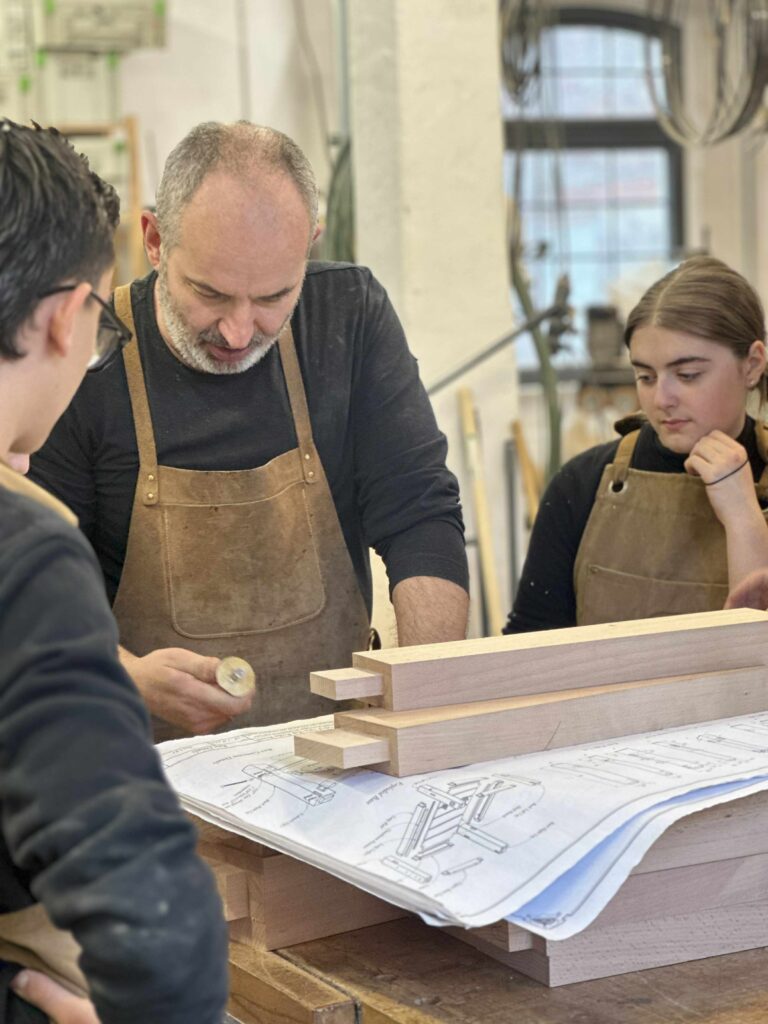
Each day offered an opportunity to share knowledge, develop patience, and experience how working with wood becomes a universal language of craftsmanship. A special thanks to Caryl, whose patience and good spirit helped us bridge the language barrier and made communication effortless throughout the workshop.
Craft as a Shared Value
I was deeply impressed by these young artisans – their focus, precision, and determination to improve their skills.
Working in our workshop is a challenge even for experienced woodworkers, and they handled it beautifully.
For me, this collaboration is proof that traditional woodworking techniques and handmade craftsmanship remain profoundly relevant.
What happened in recent weeks showed that craft is not something of the past – it’s a living practice built on attentiveness, accuracy, and respect for material.
This master–apprentice encounter also reminded me that learning through practice, and the courage to embark on the journey – literally and metaphorically – remain the most meaningful ways to gain and share knowledge.
It takes bravery, and I admire my guests for choosing such a path at such a young age.
Thank you all for your dedication, passion, and the many days filled with work, wood, and learning.