
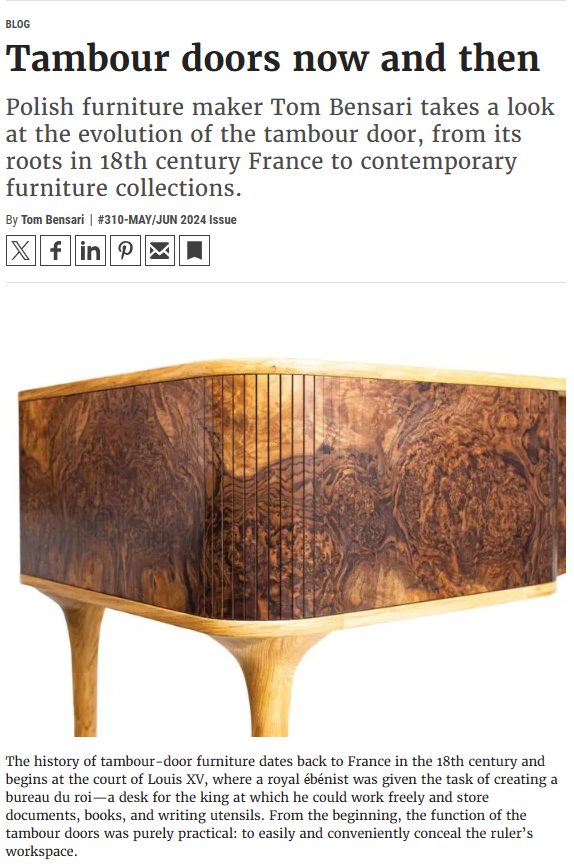
My article Tambour Doors Now and Then has been published in the iconic magazine Fine Woodworking. It is a significant recognition for me and an important moment in a body of work that has evolved over the years at the intersection of craftsmanship and design.
In the article, I trace the evolution of tambour doors – from 18th-century France and royal desks made at the court of :contentReference[oaicite:0]{index=0}, through modernism and Art Deco, to contemporary collectible furniture. It is the story of a solution that was originally purely functional – designed to organize the workspace – and over time became an essential element of formal language.
I write about how tambour doors have moved across different eras and contexts: from the workshops of royal ébénistes, through American roll-top desks, to architecture and modernist interiors, where the moving wooden structure introduced rhythm and a sense of dynamism.
Tambour doors have long been an important part of my design and woodworking practice, which is why this subject is present not only in the publication, but also in my everyday work.
At the same time, I present the practical side of this solution: material selection, working with veneer, the importance of minimal kerf width, and decisions regarding the guidance of the slats. It is precisely these details that determine the quality of the final result.
These same design and technical aspects form the foundation of the work at Bensari Workshop. During woodworking courses, participants learn not only how to make specific elements, but above all how to understand where these solutions come from and how to apply them consciously in contemporary furniture making.
Being published in Fine Woodworking confirms for me that an approach rooted in traditional craftsmanship, precision, and handwork continues to have its place in the international community – where the conversation about wood, construction, and quality still holds real meaning.


